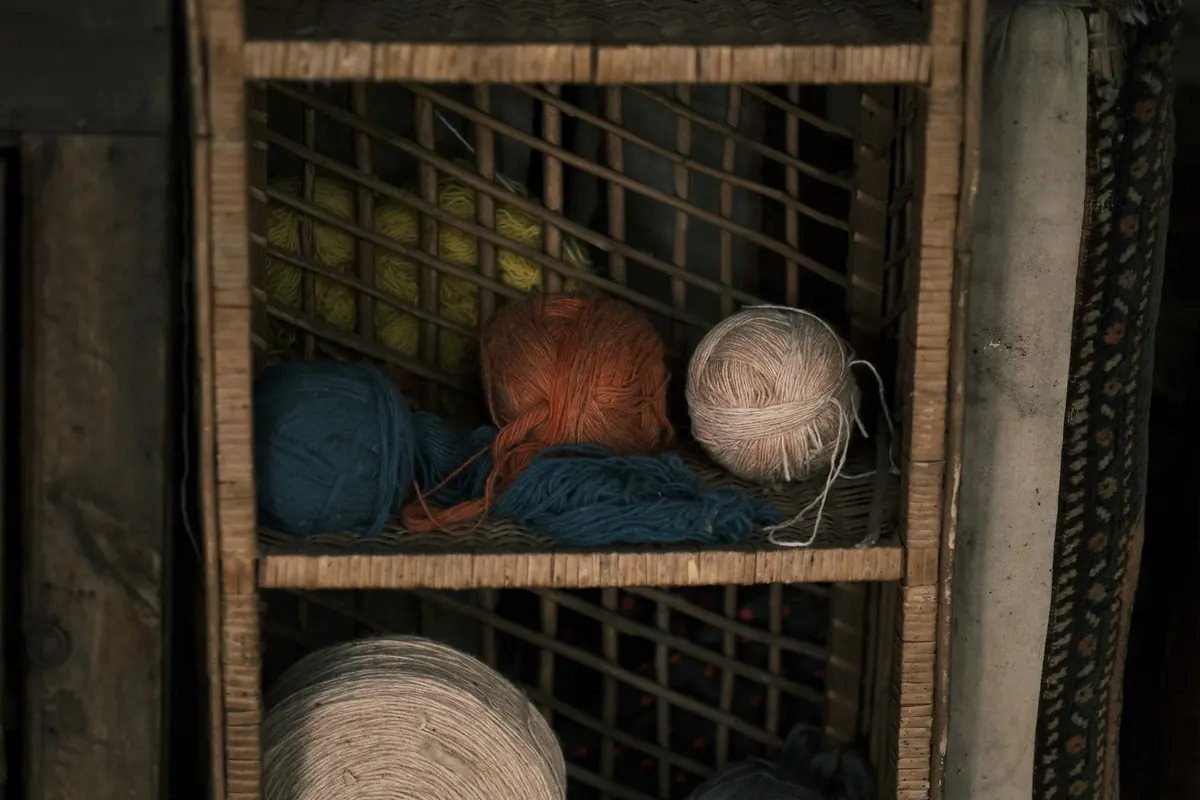
Three skeins sit side by side on the shelf: same weight, same color, similar yardage, nearly identical gauge on the label. Knit them into the same sweater and you will end up with three garments that behave nothing alike. One will stretch to your shape and hold it. One will survive the washing machine without complaint. One will hang cool and heavy on a hot afternoon.
Wool, acrylic, and cotton are the three fibers most knitters reach for, and each solves a different problem. Knowing what each one does well — and where it fails — makes it far easier to buy the right yarn the first time instead of learning the lesson from a finished sweater you never wear.
Wool: Warmth, Memory, and a Little Upkeep
Wool is the fiber most knitters picture when they picture knitting. Its crimp traps air, which is why a wool sweater feels warm without being bulky, and wool keeps insulating even when it gets damp. Its elasticity — often called memory — is what lets ribbing snap back after years of wear and what keeps cables and textured stitches looking crisp instead of flattened.
Breeds behave differently, and the label usually tells you which you're holding. Merino is fine and soft enough for next-to-skin wear, though it pills more readily. Bluefaced Leicester has a soft sheen and lovely drape. Shetland is light, warm, and slightly haloed. Corriedale is sturdier and holds up well in everyday sweaters and socks.
Wool blocks beautifully: a cool soak and a flat dry can even out uneven stitches and open up lace. That same responsiveness is the risk. Heat, agitation, and detergent can felt wool into a shrunken solid, so unless the label says superwash, treat it gently by hand. Superwash wool survives a machine cycle, but it often grows when wet and won't felt, so trust your swatch over your instincts. Wool generally costs more per skein than acrylic and needs protection from moths in storage.
Acrylic: Affordable, Washable, and Better Than Its Reputation
Acrylic gets dismissed as plastic yarn, which is unfair to anyone knitting for a toddler, a charity donation, or a blanket that will be washed every week. It's consistent, budget-friendly, and available in an enormous color range, including brights that stay bright. It goes in the washer and the dryer without drama, which makes it ideal for gifts that will be laundered without instructions.
The trade-offs are real. Acrylic doesn't breathe the way wool does, so it can feel clammy against skin, and it can pill and build static. It doesn't wet-block like wool — a light steam is enough, and a hot iron will melt or permanently crush the fabric. Dryer heat can distort it too. Acrylic also has less drape and less memory, so a stretched garment tends to stay stretched. Inexpensive acrylics can feel squeaky on the needles; better-quality ones are noticeably softer and worth the small difference in price.
Cotton: Cool, Structured, and Heavier Than You Expect
Cotton is a plant fiber with almost no elasticity. Stitches sit exactly where you put them, which gives superb stitch definition and makes cotton a natural for lace, textured patterns, and anything you want to look crisp. It's absorbent and cool, so it suits summer tops, baby garments, market bags, and dishcloths.
That lack of stretch cuts both ways. Ribbing sags, and your hands may tire on long rows because there's no bounce to carry you along. Cotton is also heavy, and a long cotton sweater can stretch under its own weight while hanging, so knit it slightly shorter than the pattern suggests and always dry it flat. Mercerized cotton has a subtle sheen and resists shrinking; unmercerized cotton is softer and more matte. Both wash well, but neither enjoys a hot dryer.
Matching Fiber to the Project
- Winter sweater or hat: wool or a wool-dominant blend. The memory holds cables and ribbing; choose superwash for gifts.
- Baby items: machine-washable acrylic, or a cotton-acrylic blend. Parents will thank you for the laundry instructions.
- Summer top: cotton or a cotton-linen blend, knit a little shorter than the pattern calls for.
- Blanket: acrylic for budget and easy care, wool for warmth and heft, cotton for weight and clean stitch definition.
- Socks: wool, ideally with some nylon. Cotton socks sag and stay wet.
- Lace shawl: wool blocks best and opens up lace most dramatically; cotton and silk blends drape well but need pinning.
- Dishcloths and bags: cotton, which is absorbent and takes abrasion well.
Blends and the Middle Ground
Many of the best yarns on the shelf are blends, and for good reason. Wool with nylon makes durable sock yarn. Cotton with acrylic makes a washable baby yarn with a little more give. A touch of silk or alpaca adds drape and halo, though alpaca brings warmth without wool's springiness. Fiber order on the label tells you which fiber dominates: a yarn listed as 70% acrylic and 30% wool will behave mostly like acrylic, with a bit of wool's warmth and bounce. Swatch blends anyway. Their behavior is rarely the average of their parts.
Care, Blocking, and Longevity
Care decides how a garment looks in year three, long after the excitement of casting on has faded. A few habits do most of the work:
- Swatch, then wash the swatch. Measure it before and after, dry it flat, and see whether it grows, shrinks, or blooms.
- Believe the label. If it says hand wash, hand wash — one hot cycle can undo weeks of knitting.
- Store knits folded, not hung. Every fiber can stretch on a hanger; cotton stretches fastest.
- Keep wool clean and sealed away from moths between seasons. Cedar helps, but a sealed bag helps more.
- Dry flat, always. Wet knits are heavy, and a hanger will pull the shoulders out of shape.
The Practical Takeaway
There is no best fiber, only a best fiber for this project. Choose wool when you want warmth, resilience, and stitch definition that lasts. Choose acrylic when you want easy care, a forgiving budget, and colors that survive repeated washing. Choose cotton when you want cool, structured fabric that shows off every stitch. Reach for a blend when you need two qualities at once.
If you're unsure, buy a single skein, knit a generous swatch, wash it the way you plan to wash the finished piece, and watch how it behaves. Ten minutes of testing tells you more about a yarn than any label ever will.
Photo: Sami Aksu / Pexels